

 5.0
Google review
Sean genuinely cares about his students and was committed to helping me succeed! I’m genuinely grateful for the role he played in helping me reach this important milestone!
Alex M
Physician-led · 1-on-1 · Live video online
Online, one-on-one board prep for students at Providence, built around Rhode Island's licensing rules.
$349 per 50-minute session
Rhode Island's only medical school is the Warren Alpert Medical School of Brown University in Providence, private and MD-granting (school list). LCME shows it accredited since 1963, with its next full survey due in 2028-29 (LCME).
Brown had 9,186 applications for 144 first-year places in 2025-26, and 10.4% of its entering class came from Rhode Island (AAMC FACTS). The CMS list counts eight teaching hospitals: five in Providence, including Rhode Island Hospital, The Miriam Hospital and Butler Hospital, and one each in Pawtucket, Warwick and Woonsocket (CMS teaching hospital list).
| School | City | Degree | Founded | Type | Exam series |
|---|---|---|---|---|---|
| Brown University Alpert Medical School | Providence | MD | 1975 | Private | USMLE |
School list: LCME and COCA accreditation lists, via the list of medical schools in the United States, checked October 2026.
| School | City | LCME accreditation | Next full survey | 2025-26 applications | First-year places | Entering class from Rhode Island |
|---|---|---|---|---|---|---|
| The Warren Alpert Medical School of Brown University | Providence | Full, since 1963 | 2028-29 | 9,186 | 144 | 10.4% |
Accreditation: LCME directory; applications, places and in-state share: AAMC FACTS, Table A-1.
| City | Internal medicine residency program | First-time takers, 2023-2025 | Passed |
|---|---|---|---|
| Providence | Rhode Island Hospital/Brown University Health Program | 118 | 86% |
| Woonsocket | New York Medical College/Landmark Medical Center Program | 20 | 85% |
ABIM internal medicine certification exam by residency program: ABIM residency program pass rates; ABIM says to read rates from under 25 takers with caution.
Sources: LCME, directory of accredited U.S. programs (checked October 29, 2026); AAMC FACTS, Table A-1, 2025-2026 (checked October 29, 2026); Warren Alpert Medical School of Brown University, Clerkship and Post-Clerkship (checked November 1, 2026); Warren Alpert Medical School of Brown University, Curriculum (checked November 1, 2026); Brown University, Program in Liberal Medical Education, Admission (checked November 1, 2026); Warren Alpert Medical School of Brown University, Routes of Admission (checked November 1, 2026); NRMP, 2025 Main Residency Match by state and specialty (checked October 29, 2026); ABIM, residency program pass rates 2023-2025 (checked October 29, 2026).
Brown asks for at least 80 weeks of clinical training across Years 3 and 4, 68 of them at the Warren Alpert Medical School, and 44 of those weeks are core clerkships (Brown clerkships). The longest is internal medicine at 12 weeks. Clinical neurosciences runs 8 weeks, four of psychiatry and four of neurology, and surgery, obstetrics and gynecology, pediatrics and family medicine take 6 weeks each.
Those lengths change how a shelf is studied. A 12-week medicine block leaves room for a full pass through a question bank plus a practice exam; a 6-week surgery or pediatrics block does not, so we start those questions in week one and keep the daily number steady instead of saving them for the last weekend. The combined psychiatry-neurology block is two shelf subjects in eight weeks, so we split each week between them from the start.
After the core year come at least 36 weeks of clinical electives, 24 of them at Brown, including a 4-week sub-internship and 6 weeks of surgical electives (Brown clerkships). If Step 2 CK falls in this stretch, we plan its dedicated weeks around the sub-internship rather than on top of it.
Brown's Years 1 and 2 are four semesters of Integrated Medical Sciences and Doctoring. Year 1 starts with cell biology, biochemistry, immunology, genetics and introductory pharmacology alongside anatomy, then brain sciences, musculoskeletal medicine and a course joining microbiology to infectious disease; Year 2 runs through the cardiovascular, renal, pulmonary, endocrine, reproductive, hematology and gastroenterology systems (Brown curriculum).
Because microbiology is taught as one block at the end of Year 1, it is often the subject Brown students have least recently seen when Step 1 arrives. We schedule spaced microbiology review through Year 2 rather than relearning it in the dedicated period. Nearly 90 percent of Brown students also take part in clinical or basic science research (Brown curriculum), so we plan Step 1 weeks around any research commitments early.
Brown admits through several routes. AMCAS is the largest; the second-largest cohort comes through the Program in Liberal Medical Education, the eight-year baccalaureate-MD program that about 50 students a year enroll in (Brown routes of admission; PLME). The Early Identification Program offers provisional admission to Rhode Island residents at Providence College, Rhode Island College and the University of Rhode Island (Brown routes of admission).
Whichever route a student came by, we start with a timed diagnostic early in Year 2, so the exam's format and pace are familiar well before the dedicated period.
For residency, Rhode Island programs offered 255 positions in 18 specialties in the 2025 Main Residency Match, most of them in internal medicine (100), anesthesiology (28) and emergency medicine (22) (NRMP). Residents who stay sit Step 3 under Rhode Island's three-attempt rule, which is why we plan Step 3 for one sitting.
A Brown MD points to the USMLE. Step 1 has been reported pass/fail since January 26, 2022, Step 2 CK comes next, and Step 3 follows after graduation (USMLE).
Rhode Island's school list has no DO school (school list). Osteopathic students who train in its hospitals come from out of state and take COMLEX-USA (NBOME).
Rhode Island's internal medicine residents later face ABIM's exam. In 2023-2025, 86% of the 118 first-time takers from the Rhode Island Hospital/Brown University Health program in Providence passed (ABIM). In Woonsocket, 85% of the 20 first-time takers from the New York Medical College/Landmark Medical Center program passed, a count under 25 that ABIM says to read with caution (ABIM).
Rhode Island's entry lists the two series separately: three attempts at each USMLE Step and three at each COMLEX Level, with no time limit (FSMB). Training before a first license is 2 years, the same for international graduates (FSMB).
| Rule | What Rhode Island requires |
|---|---|
| Training before first license | 2 years; 2 years IMG |
| Exam attempts | 3 attempts at each USMLE Step; 3 attempts at each COMLEX Level |
| Time limit | No time limit |
Source: FSMB state licensure requirements, checked October 2026; confirm with the board before relying on them.
Many Rhode Island students rotate, interview or match next door. Rhode Island's neighbors on our list: Connecticut (3 MD, 0 DO), Massachusetts (4 MD, 0 DO).
Out of 51 (the 50 states plus DC), Rhode Island ranks 11th for “Shelf exam”, 25th for “USMLE Step 2” and 27th for “USMLE”, while “USMLE Step 1” and “COMLEX” tie at 35th (Google Trends, October 2021 to October 2026). Searches tied to the clinical years outrank the Step 1 search, in a state with one MD school and no DO school.
| Search term | Rhode Island rank of 51 |
|---|---|
| USMLE | 27 |
| USMLE Step 1 | 35 |
| USMLE Step 2 | 25 |
| COMLEX | 35 |
| Shelf exam | 11 |
Source: Google Trends, United States, past 5 years, retrieved October 2026; ranks show relative interest, not student numbers.
Rhode Island students work with the same team as everyone else, online, led by Sean.
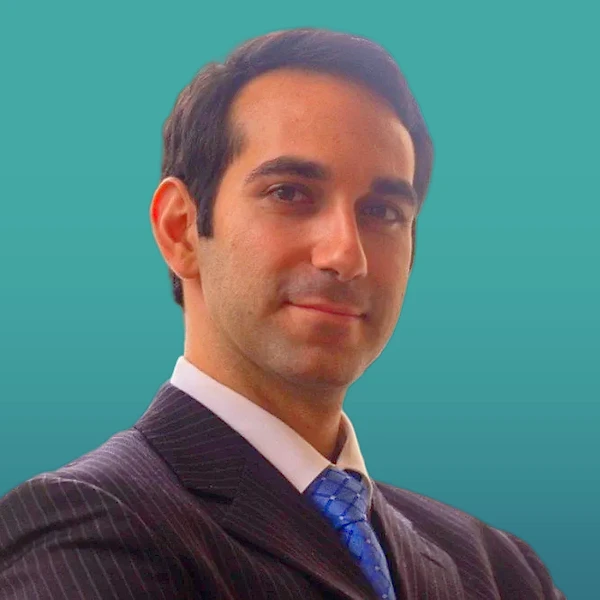 Dr. Shauhin “Sean” Moazezi, DO
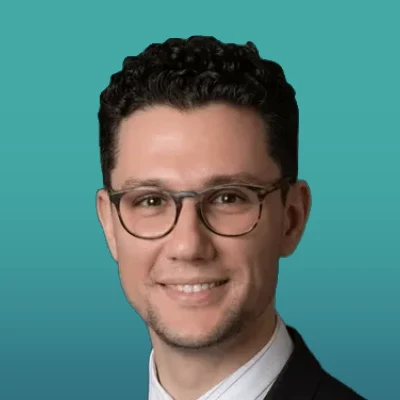 Dante Magdici
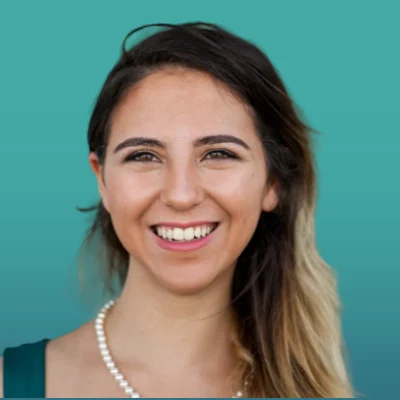 Alexandra Llovet
One-on-one by live video (Zoom or Google Meet) with our USMLE tutor team; prices and plans, our NBME practice exams guide, free intro call.
Northeast (8 states)
Midwest (12 states)
South (16 states + DC)
West (13 states)
Quoted word for word from our student reviews, with the source of each one.
Sean genuinely cares about his students and was committed to helping me succeed! I’m genuinely grateful for the role he played in helping me reach this important milestone!
FSMB lists three attempts at each USMLE Step and three at each COMLEX Level for a Rhode Island license, one fewer than the four per Step the USMLE program itself allows.
No. FSMB lists no time limit for Rhode Island.
Internal medicine is 12 weeks, clinical neurosciences 8 weeks (psychiatry and neurology), and surgery, obstetrics and gynecology, pediatrics and family medicine 6 weeks each, 44 weeks in all.
Yes. We tutor Brown students from every admission route, including PLME, one-on-one by live video (Zoom or Google Meet) for Step 1, the shelf exams, Step 2 CK and Step 3.
FSMB lists 2 years of postgraduate training before a first license, the same for international graduates.
Shelf exams
Boards and MCAT
Twenty minutes on the phone about your test date and practice scores. Sessions after that are $349 per 50-minute session.